
Best indoor air purifier plants lists circulate every spring, usually citing a single laboratory study from decades ago. This guide separates what greenery genuinely does for a room from what a filter does, then ranks seven HEPA machines by clean air delivery rate, coverage area and filter cost so you can decide where your money belongs.
As an Amazon Associate we earn from qualifying purchases.
Our top picks


 LEVOIT Air Purifier for Home Allergies and
- Power Source: Corded Electric
- Control Method: Touch
- Filter Type: 3 in 1 Filtration
Covers up to 1073 square feet on one unit
Operates as quiet as 24 decibels in sleep mode
Captures 99.97 percent of particles down to 0.1 microns
Requires genuine Levoit replacement filters for proper performance
Corded electric design needs a nearby wall outlet

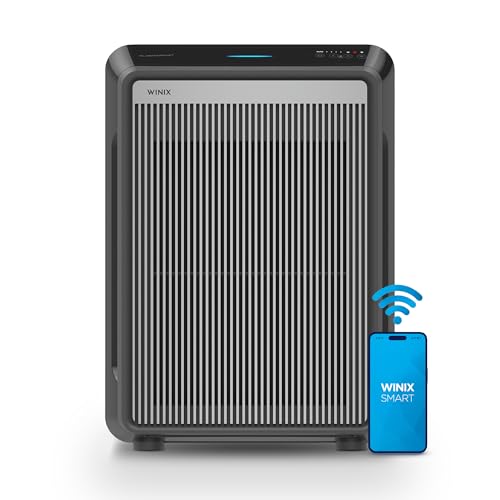 Winix 9800 4-Stage True Hepa Air Purifier
- AHAM Verifide at 500 sq ft.: Also cleans…
- The Smarter Air Purifier: Control and monitor your…
- Washable Fine Mesh Pre-Filter: The first line of…

As an Amazon Associate we earn from qualifying purchases at no extra cost to you.
By Daniel Foster
What Plants Do and What Filters Do
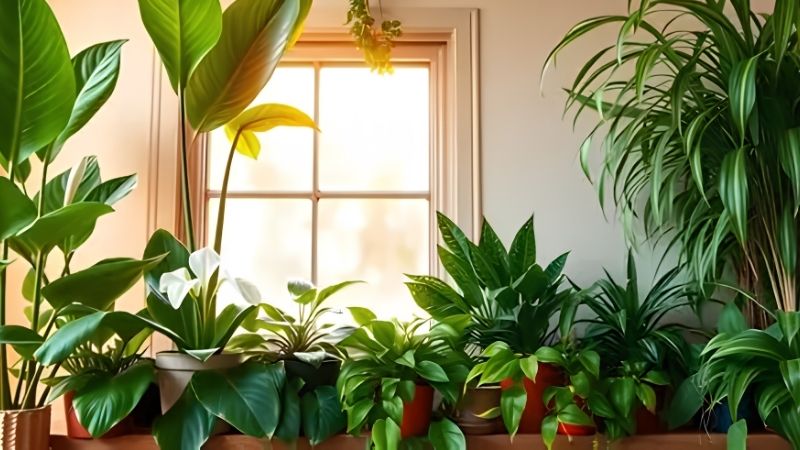
The claim that houseplants clean indoor air comes from sealed-chamber research conducted by NASA in 1989, which measured how quickly plants absorbed specific volatile compounds in a container roughly the size of a wardrobe. Reading that result across to a furnished room is where the popular advice breaks down.
CADR and Coverage: The Numbers That Decide It
Clean air delivery rate is the figure that makes comparison possible. Measured in cubic feet per minute across smoke, dust and pollen, it describes how much genuinely filtered air a machine produces every minute. A rating near 240 cfm is capable in a medium room; below 100 cfm belongs in a small bedroom.
Coverage claims mean nothing without an air change rate attached. A unit advertised for 1,000 square feet at two changes per hour performs far worse than one rated for 400 square feet at five changes per hour, and allergy sufferers generally want four or more changes hourly in the room they occupy most.
Against those numbers, a potted plant contributes a clean air delivery rate close to zero at practical densities. Independent reanalysis of the original chamber work suggests a typical room would need something in the range of ten to a hundred plants per square metre to match one modest filter, which is why the best indoor air purifier plants advice is better treated as decorating guidance.
Space and Fit: Where a Purifier Physically Goes
Tower units typically occupy a footprint near 10 by 10 inches and stand 20 to 26 inches tall, while wider box designs trade height for width. Measure the intended corner before ordering, and confirm the top-mounted controls will not sit under a shelf.
Clearance matters more than most buyers expect. Side-intake models need several inches of open space around the grille, and a unit pushed flat against a sofa loses a meaningful share of its rated throughput. Plants, incidentally, have no such requirement, which is part of why the two get combined in the same room happily.
Filters, Noise and Running Cost
True HEPA media captures 99.97 percent of particles at 0.3 microns, which covers pollen, dust, dander and smoke particulate. Activated carbon handles odours and some volatile compounds, and it is the layer that saturates fastest, often needing replacement every three to six months in a kitchen.
Noise decides whether the machine actually runs. Ratings near 25 decibels on the lowest setting are quiet enough for sleep, while full speed on a large unit can reach 50 decibels or more. A purifier switched off because it is loud cleans nothing, so check the figure at the setting you will use overnight.
Seven Purifiers That Do the Work Plants Cannot
Readers who arrive searching for the best indoor air purifier plants usually end up here, and the machines below span small bedrooms to open-plan living areas. Every entry names a real drawback, and figures reflect manufacturer specifications combined with pooled long-term owner reports rather than testing conducted by this site.
1. Coway Airmega AP-1512HH Mighty — The Balanced Default
Coway pairs a true HEPA layer with activated carbon and a washable pre-filter, rated around 246 cfm for dust and covering roughly 361 square feet at 4.8 air changes per hour. The automatic mode responds quickly to cooking and dust, and the eco setting stops the fan when air stays clean.
The ionising function is optional but on by default, and owners who prefer to avoid it must remember to switch it off after each power cut. The plastic finish is functional rather than attractive next to a plant shelf.
2. Levoit Core 400S — Large Room Value
A cylindrical 360-degree intake design rated for roughly 403 square feet at 4.8 changes per hour, with app control, air quality readings and a genuinely quiet sleep mode. For a living room that also hosts a collection of greenery, the coverage is appropriate.
Filters are proprietary and the three-layer cartridge must be replaced as a unit rather than in stages, so carbon saturation forces early replacement of otherwise healthy HEPA media.
3. Winix 5500-2 — Odour Control on a Budget
Winix carries an unusually thick carbon pellet layer for the price, which makes it effective against cooking smells, pet odour and the earthy note of damp potting soil. Coverage sits near 360 square feet and the washable pre-filter reduces running cost.
The PlasmaWave feature is a marketing point of limited value and can be disabled. Full fan speed is noticeably loud, and the display cannot be fully dimmed on older units.
4. Blueair Blue Pure 511 — The Small Room Choice
A compact single-filter unit sized for bedrooms and home offices, using a fabric pre-sleeve that doubles as a colour choice. It is light enough to move between rooms and draws very little power.
There is no air quality sensor and no automatic mode, so the fan runs at whatever speed you set. Coverage is genuinely limited to smaller spaces despite generous marketing claims.
5. Honeywell HPA300 — Maximum Throughput
With clean air delivery rates around 300 cfm and coverage near 465 square feet, this is the choice when a large open room needs real turnover. Three HEPA panels plus a carbon pre-filter handle heavy dust loads.
It is bulky, plain and loud at the top setting. Filter replacements are needed in sets, which makes the annual cost higher than the purchase price suggests.
6. Rabbit Air MinusA2 — Wall Mounted and Discreet
The only unit here that hangs on a wall, freeing floor space entirely and clearing the way for furniture and planters. Six filtration stages include a customisable layer for odour, germ or pet concerns.
It sits at the premium end and the specialised filter layer adds to replacement cost. Wall mounting requires anchoring and a nearby outlet, so placement must be planned rather than improvised.
7. Blueair Blue Pure 211i Max — Quiet High Output
A wide box design that moves a large volume of air at comparatively low noise, which suits open-plan rooms where a tower would need to run at an audible speed. Automatic mode responds sensibly to sudden particle spikes.
The footprint is broad and it looks like an appliance rather than furniture. Replacement filters are proprietary and sit above the category average in price.
| Model | Approx. coverage | Carbon layer | Auto mode | Best for |
|---|---|---|---|---|
| Coway AP-1512HH | 361 sq ft (34 m2) | Moderate | Yes | All-round bedroom to living room |
| Levoit Core 400S | 403 sq ft (37 m2) | Moderate | Yes | Large rooms with app control |
| Winix 5500-2 | 360 sq ft (33 m2) | Thick pellet | Yes | Odours and pets |
| Blueair Blue Pure 511 | Small rooms | Light | No | Bedrooms and offices |
| Honeywell HPA300 | 465 sq ft (43 m2) | Pre-filter only | No | Heavy dust loads |
| Rabbit Air MinusA2 | Up to 815 sq ft (76 m2) | Customisable | Yes | Wall mounting, no floor space |
| Blueair 211i Max | Large open plan | Moderate | Yes | Quiet high throughput |
Pricing and filter costs change regularly, so check both figures at the moment of purchase rather than relying on any published number.
Keeping Both: Plants and Filters in the Same Room
None of this argues against houseplants, and nothing above says the best indoor air purifier plants are a bad purchase. They change how a room feels, they are genuinely pleasant to keep, and they cost very little to run. The honest position is that they are decoration with mild humidity benefits, not air treatment equipment.
What Plants Actually Contribute
Transpiration adds a small amount of moisture to the air, which some people notice in dry winter rooms, and it is the one measurable contribution the best indoor air purifier plants genuinely make. Foliage also traps a little settled dust on leaf surfaces, though that dust returns to circulation whenever the leaves are disturbed or wiped.
The measurable downsides are worth knowing too. Damp potting soil supports mould growth and fungus gnats, and over-watered pots raise local humidity in a way that can work against people with mould sensitivity. Bottom watering and a layer of coarse topdressing reduce both problems.
Maintenance and What Fails First
On the machine side, a clogged pre-filter is the most common cause of apparent failure. Vacuum or rinse it monthly and the HEPA layer behind it lasts far closer to its rated life. Neglecting that step roughly halves filter longevity in a home with pets.
Carbon exhausts silently. There is no indicator for odour capacity, so replace on schedule rather than waiting for smells to return. Motors themselves rarely fail before the seven to ten year mark, making filters the dominant lifetime cost.
Seasonal Demand and Buying Windows
Interest in filtration follows the calendar closely. Ragweed pollen peaks through late summer and early autumn, wildfire smoke drives sharp regional spikes in the western United States during the same months, and closed windows in heating season concentrate dust indoors from November onward.
That demand curve overlaps two useful buying periods: Prime Big Deal Days in early October and the Black Friday and Cyber Monday window at the end of November. Buying ahead of a season generally means better model availability than shopping during a smoke event, when stock disappears quickly.
Frequently Asked Questions
These questions come up constantly from readers who arrived looking for the best indoor air purifier plants and left with a filter instead.
Which houseplants are worth keeping anyway?
Snake plant, pothos, spider plant and peace lily are all forgiving of low light and irregular watering, which is the honest reason to choose them. Treat their contribution to air quality as negligible and their contribution to a room as real.
Do plants help with humidity?
Slightly, through transpiration, and the effect scales with plant size and watering frequency. A large fiddle leaf fig in a small room is measurable; three succulents on a windowsill are not.
Can plants make indoor air worse?
They can in specific circumstances. Persistently damp soil supports mould growth, and people sensitive to mould spores sometimes react to a crowded plant corner. Good drainage and restrained watering prevent nearly all of it.
Where should the purifier go if the room is full of plants?
The best place to put air purifier hardware here is in the open, several feet from walls and clear of foliage. Leaves blocking an intake grille reduce throughput exactly the way a curtain does, so give the machine its own space rather than tucking it behind the greenery.
See More:
- Best low price dash cam
- Projector screens at Best Buy
- Best buy projector screens
- Best projector for games
- Best projector for gaming
Final Thoughts on Best Indoor Air Purifier Plants
The best indoor air purifier plants for a home are the ones you enjoy looking after, because their filtration contribution at realistic densities is too small to measure. Actual particle removal comes from clean air delivery rate, coverage matched to the room, and a filter changed on schedule.
Measure the room in square feet before ordering, check the coverage rating against it at four or more air changes per hour, and price three years of replacement filters. Then buy as many plants as the windowsills will hold, for the reasons that actually apply.

Write Your Review
No reviews yet. Be the first to share your experience!