
Best plant air purifier searches usually mix two different ideas: houseplants that supposedly clean indoor air, and machines suited to homes full of plants. The first claim does not survive the research; the second is a real requirement, and this guide covers both honestly.
As an Amazon Associate we earn from qualifying purchases.
Our top picks


As an Amazon Associate we earn from qualifying purchases at no extra cost to you.
By Daniel Foster
Specifications come from manufacturer documentation and long-term owner feedback rather than lab testing. Nothing here is medical advice; for persistent allergy or respiratory symptoms, speak with a physician.
🛒 Best Price Today on Amazon
Prime members get fast, free shipping on everything above, plus member-only deals. New members get a 30-day free trial — cancel anytime.
Start 30-Day Prime Free Trial →See Today’s Amazon DealsWhat Houseplants Do and Do Not Do for Indoor Air
The best plant air purifier question has two answers because the claim behind it has a specific origin and a specific rebuttal. Both are worth knowing before spending money on either plants or a machine.
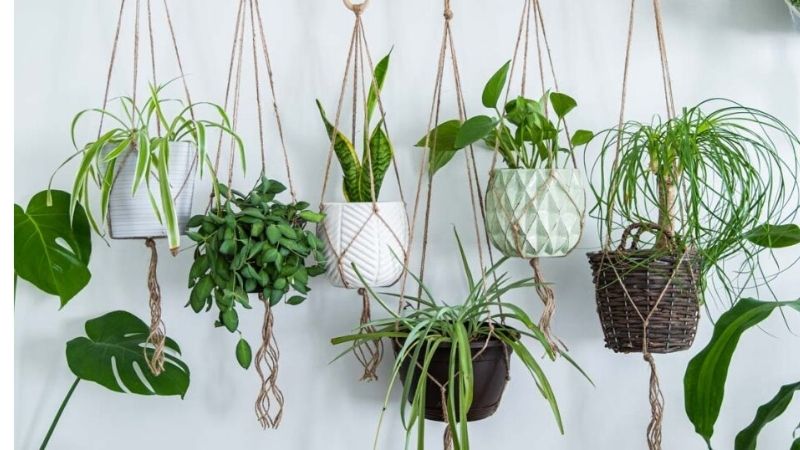
The Research Behind the Claim
The idea traces to a NASA study published in 1989, which measured plants removing volatile organic compounds inside small sealed chambers. Those conditions bear little resemblance to a ventilated room in a house, and the study was never designed to model one.
A 2019 analysis by Cummings and Waring, published in the Journal of Exposure Science and Environmental Epidemiology, reviewed decades of chamber studies and concluded that ordinary building ventilation removes VOCs far faster than potted plants do. Matching a normal air change rate would require an implausible density of plants per square metre.
CADR, Coverage and the Numbers That Do Matter
For machines, CADR in cubic feet per minute is the decisive figure behind any best plant air purifier claim, checked against room area. Coverage claims are frequently quoted at a single air change per hour; four to five air changes is the useful standard, so divide a headline figure by four or five for a realistic area.
For a plant-heavy living room of roughly 400 sq ft (37 m2), that points at a machine with CADR around 250 cfm or higher. Activated carbon capacity matters here too, since damp soil and organic matter produce odours a thin carbon layer will not hold for long.
Where a Purifier Fits Around Plants
Purifiers need 12 in (30 cm) or more of clearance to draw and discharge air, and a plant collection is exactly the sort of clutter that blocks an intake. A unit tucked behind foliage moves far less air than its rating suggests.
Measure the floor area you can genuinely leave clear before choosing a size, and keep the intake away from soil surfaces where watering stirs up particles. Placing the machine near the room’s main doorway usually catches more circulating air than a corner position.
Mould Spores, Damp Soil and Pollen
Plants do bring genuine airborne particles into a room. Overwatered soil supports fungal growth, and disturbing it releases spores; flowering plants add pollen; compost and organic fertilisers add odours. A true HEPA filter captures 99.97 percent of particles at 0.3 microns, which covers spores and pollen.
Filtering does not stop production. If soil is persistently damp, the fix is watering habits, drainage and ventilation, with the purifier reducing what circulates rather than solving the cause. Treat it as a supplement to humidity control, not a replacement.
Six Purifiers for Plant-Filled Rooms
A best plant air purifier in the practical sense is a machine sized for a living room rather than a bedroom, with real carbon capacity. Each entry below lists a genuine drawback.
| Model | Scale | Carbon | Best for |
|---|---|---|---|
| Levoit Core 400S | Around 260 cfm CADR | Moderate | Mid-size rooms |
| Coway Airmega 400 | Large rooms | Substantial | Open-plan spaces |
| Blueair Blue Pure 211i Max | Large rooms | Combined filter | Quiet high throughput |
| Alen BreatheSmart 45i | Large rooms | Filter options | Choosing a filter type |
| Winix AM90 | Mid to large | Thick carbon | Odour control |
| Honeywell HPA300 | Around 300 cfm CADR | Pre-filter only | Throughput per pound |
Levoit Core 400S: Sensible Size for a Living Room
CADR around 260 cfm with a three-stage filter and app control, which suits a room of roughly 400 sq ft (37 m2) at a meaningful air change rate. The quiet setting is genuinely quiet, useful if the plant room is also where you work.
The 360-degree intake needs clearance on every side, which conflicts directly with a crowded plant shelf. The carbon layer is moderate, so persistent soil or compost odours will saturate it faster than the HEPA media wears out.
Coway Airmega 400: Throughput and Carbon Capacity
Built for large open-plan spaces with dual filters on both sides and a substantial activated carbon layer, which is what makes it effective against the organic odours a plant collection produces. Auto mode responds to a particle sensor.
It is expensive to buy and the paired filters are expensive to replace, so the annual running cost is the highest here. It is also physically large, needing a genuine floor position rather than a shelf.
Blueair Blue Pure 211i Max: Quiet at High Speed
High airflow from a design that moves a large volume at relatively low noise, using a combined particle and carbon filter with a washable fabric pre-filter sleeve. For a large plant room where the unit runs most of the day, that noise profile matters.
The combined filter means you replace carbon and particle media together even when only one is exhausted, which raises effective running cost. It also needs clearance all around, and the fabric sleeve collects visible dust that needs regular washing.
Alen BreatheSmart 45i: Pick Your Filter
Covers a large room and lets you choose the filter type at purchase, including versions weighted toward smoke and odours or toward allergens. For a plant collection producing spores and soil smells, that choice is more useful than it first appears.
The machine and its filters sit at a premium price, and the filter choice only helps if you correctly identify your problem. It is also a large floor unit rather than something that disappears into a room.
Winix AM90: Odour Control Without the Premium
A mid to large room unit with a thick carbon filter, true HEPA media and app control, at a lower price than the premium options here. The carbon capacity is the reason it suits homes with damp soil, compost or pets alongside plants.
It includes PlasmaWave, an ionising function; switch it off if you prefer to avoid ionisers, and the unit still works as a straightforward HEPA and carbon machine. Auto mode also ramps audibly, which is noticeable in a quiet room.
Honeywell HPA300: Air Moved Per Pound Spent
CADR around 300 cfm makes this one of the highest-throughput machines at its price, suiting a large room where particle capture matters more than odour control. Filters are widely available, which keeps ownership simple.
Carbon is limited to a thin pre-filter, so it is a poor odour machine and will not hold soil or compost smells. It is also loud at the higher settings, closer to a fan than the quieter premium designs.
Living With Plants and a Purifier Together
Three practical points determine whether the best plant air purifier setup works or simply adds an appliance to a crowded room.
Watering, Drainage and Fungus Gnats
Persistently wet topsoil is the root of most plant-related air complaints: fungal growth, musty smells and fungus gnats all follow from it. Letting the top inch or two dry between waterings, improving drainage and avoiding oversized pots addresses the cause.
A purifier reduces what ends up airborne but does not stop production. If a room smells musty with a purifier running, the answer is ventilation and moisture control, not a bigger machine.
Filter Life With Plants in the Room
Expect carbon layers to saturate faster in a plant-heavy room, often within three to six months, and pre-filters to collect visible soil dust. HEPA media typically runs 6 to 12 months, but reduced airflow is the real signal that a change is due.
Price a year of filters before buying and check the manufacturer stocks them reliably. Third-party alternatives vary in seal quality, and a filter that does not seat properly lets air bypass the media entirely.
Humidity, Ventilation and Seasonal Demand
Plants raise indoor humidity slightly, which is welcome in a dry heated home and unwelcome in a room that already condenses on the windows. A hygrometer costs very little and tells you which situation you are in before you buy any appliance.
Demand for purifiers rises through autumn as homes close up and heating starts, overlapping with the early October Amazon deal event and the late November promotional period. That is a reasonable moment to buy spare filters, though prices move constantly and should be checked at purchase.
Frequently Asked Questions
These three questions cover what readers ask most when searching for a best plant air purifier.
How many plants would clean a room’s air?
Based on the Cummings and Waring analysis, the density required to match ordinary building ventilation is far beyond what fits in a normal room. Keep plants because you like them; do not buy them as air cleaning equipment.
Do plants release anything harmful at night?
They respire and release small amounts of carbon dioxide when not photosynthesising, but the quantities in a normal bedroom are negligible compared with what the occupants themselves produce overnight. Ventilation handles both. This is not a reason to move plants out of a bedroom, and it is not a reason to expect them to clean the air either.
Will a purifier stop fungus gnats?
It may capture some adults in flight, but it does not address larvae in the soil, which is where the population lives. Drying the topsoil between waterings and using a physical soil barrier tackles the cause; the purifier only reduces the nuisance.
See More:
- Best low price dash cam
- Projector screens at Best Buy
- Best buy projector screens
- Best projector for games
- Best projector for gaming
Final Thoughts on Plants and Clean Air
The best plant air purifier is a machine, not a monstera. Houseplants earn their place aesthetically and add small amounts of humidity, but the evidence does not support treating them as air cleaning equipment in a ventilated home.
For a plant-filled room, choose CADR against your floor area at four to five air changes per hour and prioritise carbon capacity for soil and compost odours. Whichever best plant air purifier you settle on, measure the clear floor space it needs first and fix watering habits before blaming the air.

Write Your Review
No reviews yet. Be the first to share your experience!