
Best air purifier for bedrooms in a house with three or four of them is a different problem from buying one machine. The question becomes how many units you need, what each room actually requires, and whether one large purifier moved around can do the job.
As an Amazon Associate we earn from qualifying purchases.
Our top picks
 VOOPNU Air Purifiers for Home
- Effortless Operation: Simplified control panel with intuitive design…
- Compact Yet Powerful: Covers up to 1,076 ft²…
- 360° Airflow & High Efficiency Filtration: The elegantly…
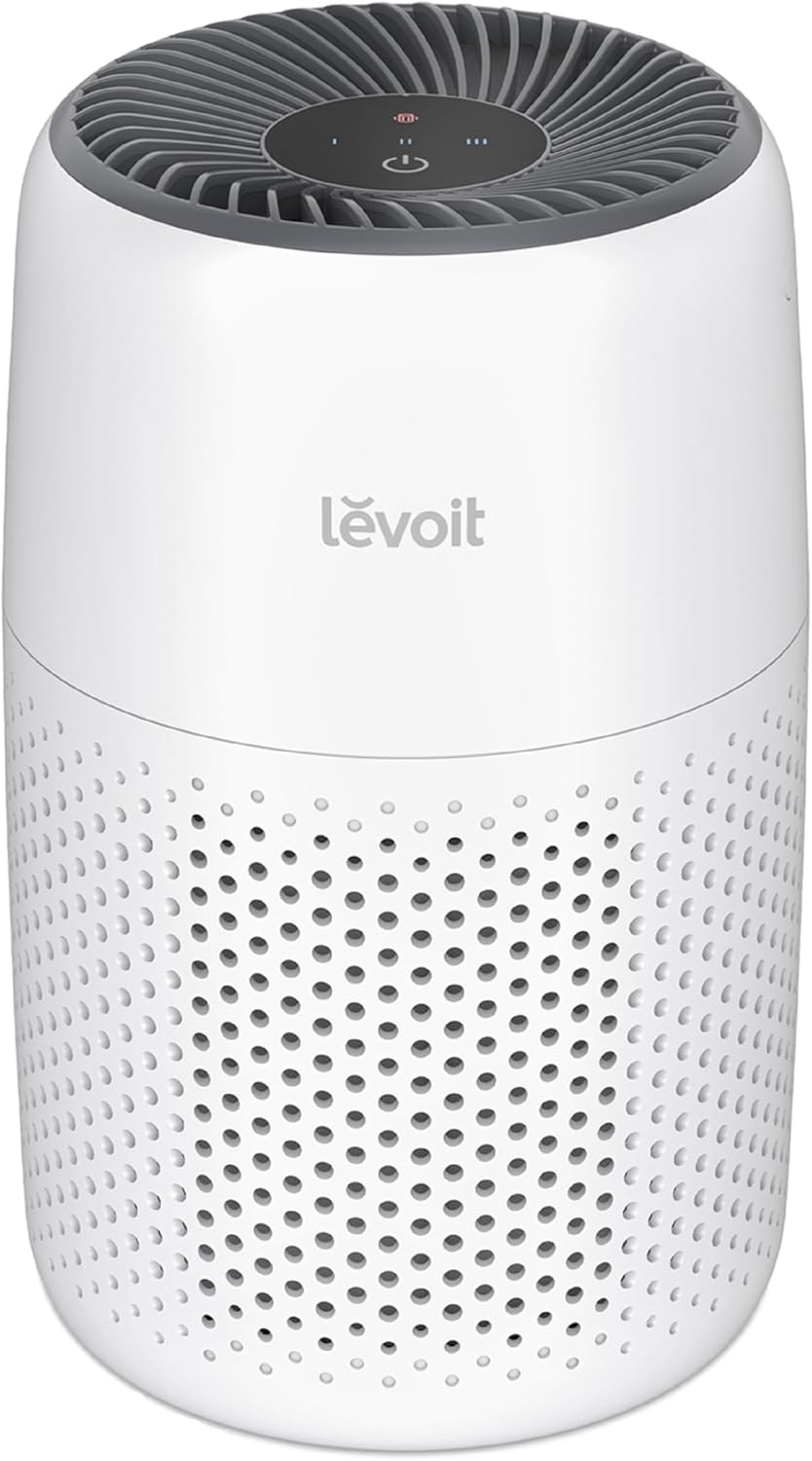
 LEVOIT Air Purifier for Home Allergies and
- Power Source: Corded Electric
- Control Method: Touch
- Filter Type: 3 in 1 Filtration
Covers up to 1073 square feet on one unit
Operates as quiet as 24 decibels in sleep mode
Captures 99.97 percent of particles down to 0.1 microns
Requires genuine Levoit replacement filters for proper performance
Corded electric design needs a nearby wall outlet


 Purivortex Air Purifiers for Bedroom
- Cleaner Air In Minutes: Purivortex is proven to…
- Breathe Easier with 99.97% Filtration: Purivortex HEPA air…
- Bigger Filter, Better Purification: Purivortex goes beyond the…

As an Amazon Associate we earn from qualifying purchases at no extra cost to you.
By Daniel Foster
Specifications come from manufacturer documentation and long-term owner feedback rather than lab testing. Nothing here is medical advice; for persistent respiratory or allergy symptoms, speak with a physician.
🛒 Best Price Today on Amazon
Prime members get fast, free shipping on everything above, plus member-only deals. New members get a 30-day free trial — cancel anytime.
Start 30-Day Prime Free Trial →See Today’s Amazon DealsOne Machine Per Room, or One Machine That Moves
A purifier only cleans the room it occupies, and a closed bedroom door is a hard boundary. That single fact drives every decision about the best air purifier for bedrooms in a multi-room home, including whether you buy one machine or four. Four specifications follow from it.
CADR Per Room and Air Changes Per Hour
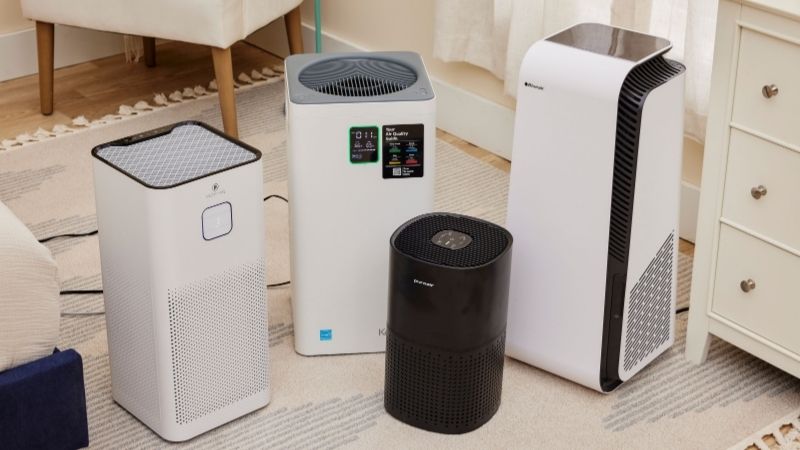
CADR in cubic feet per minute, checked against each room’s floor area, is the decisive number behind any best air purifier for bedrooms decision. Coverage claims are usually quoted at one air change per hour, which is far too slow for allergies; four to five air changes is the standard worth targeting.
Divide any headline coverage figure by four or five to get the honest area, then compare that against a tape measure rather than an estimate. A child’s bedroom of 120 sq ft (11 m2) needs far less machine than a master bedroom of 350 sq ft (33 m2), so buying identical units for every room usually means overpaying in some and underserving others.
Noise on the Lowest Setting
Bedrooms are judged on the quiet setting, not the rated maximum. Sleep modes on good units sit around 24 to 28 dB, which disappears into a room. Mid speeds reach 40 to 50 dB, which many people can sleep through but children often cannot.
Because CADR is measured at maximum speed, sizing up is the standard trick: a larger machine ticking over quietly moves more clean air than a small one straining. In a nursery that difference decides whether the unit stays switched on.
Floor Space, Clearance and Moving Units Between Rooms
Purifiers need 12 in (30 cm) or more of clearance to draw and discharge air, and units with a 360-degree intake need it on every side. In a small bedroom that clearance, not the footprint, is the real constraint.
Measure the clear floor area in each room before deciding how many units to buy. If you plan to move one machine around, weight and handle design matter, and be realistic: a purifier carried between rooms each night usually ends up living in one of them permanently.
Filter Costs Multiplied by the Number of Rooms
Running three purifiers means buying three sets of filters, typically every 6 to 12 months, with carbon layers saturating sooner. That recurring figure is what makes the cheapest machine a poor choice when multiplied across a house.
Standardising on one brand and one filter size across rooms simplifies restocking and often lowers cost per set. Check availability before committing, and look for UL or ETL marks; if a model includes an ioniser, confirm it can be switched off.
Six Units Sized for Different Bedrooms
The best air purifier for bedrooms of different sizes is rarely one model bought three times, so these cover a nursery, a small child’s room and a master bedroom. Each entry lists a genuine drawback, since those decide between machines with similar coverage claims.
| Model | Room scale | Quiet setting | Best for |
|---|---|---|---|
| Levoit Core Mini | Very small rooms | Around 25 dB | Nursery, box room |
| Levoit Core 200S | Small bedrooms | Around 24 dB | Child’s room |
| Blueair Blue Pure 411a Max | Around 190 sq ft / 18 m2 | Very quiet | Simplicity |
| Coway Airmega 150 | Mid-size bedrooms | Quiet low speed | Balance of size and noise |
| Winix A231 | Mid to large bedrooms | Low speed audible | Value per cfm |
| GermGuardian AC4825E | Small to mid rooms | Audible at low | Lowest outlay |
Levoit Core Mini: The Nursery Answer
A very small cylinder with a three-stage filter, quiet enough at around 25 dB to sit in a nursery without competing with a white noise machine. It occupies almost no floor space and can stand on a chest of drawers.
Coverage is genuinely limited, so it belongs in rooms under roughly 100 sq ft (9 m2) and nowhere larger. The small filter also needs replacing more often than bigger units, which erodes the low purchase price over a couple of years.
Levoit Core 200S: A Child’s Bedroom Without the Noise
Slightly larger than the Mini with app control, scheduling and a sleep mode around 24 dB. For a child’s room of roughly 150 to 200 sq ft (14 to 19 m2) it reaches a useful air change rate without ever being audible.
The 360-degree intake means it cannot sit against a wall, which is awkward in a small room full of furniture. App features also age with the app, and some owners would rather have physical buttons and nothing to update.
Blueair Blue Pure 411a Max: One Button, Nothing to Learn
Covers roughly 190 sq ft (18 m2) with a washable fabric pre-filter sleeve over a combined particle and carbon filter, and it is among the quietest machines in this class at low speed. There is nothing to configure, which matters in a room used by a child.
There is no air quality sensor and no auto mode, so it runs at the speed you set. The combined filter also means replacing particle and carbon media together, even when only the carbon is exhausted.
Coway Airmega 150: The Middle Bedroom Choice
Sized for mid-size bedrooms with a true HEPA layer, activated carbon and an air quality indicator, with a low setting quiet enough to sleep beside. Filter replacement intervals are longer than the compact models here.
Auto mode ramps the fan up and down audibly as readings change, which light sleepers notice; a fixed low speed avoids it. It is also taller than the compact units and needs a floor position rather than a shelf.
Winix A231: More Airflow Per Pound
A tower design with true HEPA, a carbon layer and enough throughput for a larger bedroom, at a price below the premium brands. For a master bedroom over roughly 300 sq ft (28 m2) it reaches a useful air change rate without a large outlay.
The low setting is audible rather than silent, closer to a soft fan. It also includes PlasmaWave, an ionising function that can be switched off; do that if avoiding ionisers matters to you, and it still works as a plain HEPA and carbon machine.
GermGuardian AC4825E: Lowest Cost Per Room
A slim 22 in (56 cm) tower with true HEPA, a carbon pre-filter and an optional UV-C lamp, at the lowest price here. When you need three or four units at once, cost per room becomes the deciding factor and this is where people land.
Even the lowest speed is clearly audible, which rules it out for light sleepers. The UV-C lamp adds little in a consumer unit because contact time is very short, and it consumes power and eventually needs replacing.
Running Several Purifiers in One House
Buying the best air purifier for bedrooms across a house is only half the job. Three ownership realities separate a working multi-room setup from three appliances quietly underperforming behind furniture.
Filter Schedules Across Multiple Units
Different rooms load filters at different rates: a bedroom with a pet, a room above a kitchen, a nursery with the door mostly closed. Reduced airflow rather than a calendar date is the real signal, and it is easy to miss when tracking several machines.
Write the fitting date on each filter in marker as you install it. Buying spares in multipacks when they are discounted is more useful than upgrading a machine, and standardising on one brand keeps that simple.
Doors, Ventilation and What a Purifier Cannot Do
Closing bedroom doors at night is the single free change that makes every unit more effective, because an open door means each machine is fighting the whole house.
Purifiers also do nothing about moisture. Condensation and damp need ventilation and humidity control, and filtering spores does not stop them being produced. A hygrometer costs very little and tells you whether the real problem is particles or humidity.
Timing Purchases for Several Rooms
Demand climbs through autumn as windows close, heating starts and respiratory virus season begins, which overlaps with the Amazon deal event in early October and the Black Friday to Cyber Monday window at the end of November.
Buying several units at once is exactly the purchase worth timing to those windows, and stocking a year of filters alongside them. Prices move constantly, so verify at the point of purchase rather than relying on any expected discount.
Frequently Asked Questions
Three questions come up in nearly every message from readers working out the best air purifier for bedrooms across a whole floor.
Can one large purifier cover the whole floor?
Only with doors open, which defeats the point at night. A large machine in a hallway does very little for a closed bedroom. Per-room units, sized to each room, work better than one oversized machine in a central position.
Are child-specific models worth it?
The useful features are quiet operation, a lockable control panel and a stable base, not branding. Any HEPA and carbon unit that meets those three requirements works in a child’s room; there is no filtration difference in models marketed for nurseries.
Should I run them all day?
Continuous low-speed operation is more effective than intermittent bursts, because particle levels rebuild when a unit is off. Power draw at low speed is modest, and running quietly all day is also what keeps filters loading evenly.
See More:
- Best low price dash cam
- Projector screens at Best Buy
- Best buy projector screens
- Best projector for games
- Best projector for gaming
Final Thoughts on Covering Multiple Bedrooms
The best air purifier for bedrooms across a whole house is rarely one model bought three times. Size each unit to its room at four to five air changes per hour, check the decibel figure on the lowest setting, and standardise the brand so filters stay simple to restock.
Measure the clear floor space in each room before ordering, and price a year of filters for every machine as part of the purchase. Whichever best air purifier for bedrooms combination you assemble, close the doors at night, because that costs nothing and improves every unit at once.





Write Your Review
No reviews yet. Be the first to share your experience!