
Best water for a humidifier depends entirely on how the machine turns liquid into moisture, which is why blanket advice about distilled water is only half right. This guide explains what each design does with dissolved minerals, then ranks seven humidifiers by how tolerant they are of ordinary tap water.
As an Amazon Associate we earn from qualifying purchases.
Our top picks




As an Amazon Associate we earn from qualifying purchases at no extra cost to you.
By Daniel Foster
What Each Design Does With Minerals
Tap water carries dissolved calcium and magnesium. Where those minerals end up decides the best water for a humidifier in your home, and the answer is different for every humidifier type on the shelf.
Mist Type, Coverage and Noise: The Numbers That Decide It
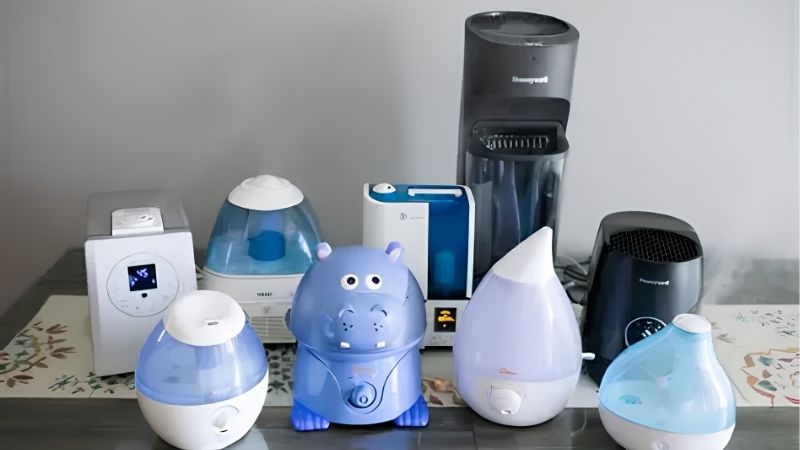
Ultrasonic units vibrate a plate at high frequency, atomising water and everything dissolved in it, which makes the best water for a humidifier question sharpest here. Minerals leave the tank with the mist and settle as a fine white dust on furniture, which is the single strongest argument for distilled water in a specific machine type.
Evaporative units draw air through a wet wick. Minerals stay behind in the wick, which stiffens and needs replacing every one to three months, but nothing mineral enters the room. Warm mist units boil the water, leaving scale on the heating element instead.
Coverage and noise complete the specification set. Match tank capacity and output in millilitres per hour to room size, and check the decibel rating at the setting you will run overnight, since ultrasonic designs are typically the quietest and evaporative the loudest.
Space and Fit: Tank Access and Placement
Measure the surface where the machine will sit, then check the height needed to lift the tank out and carry it to a tap. Top-fill designs avoid that entirely and are worth prioritising if the unit lives on a nightstand under a shelf.
Placement affects mineral dust visibly. An ultrasonic unit filled with tap water and placed near a television or a dark surface will show the residue within days, whereas the same machine on a bare floor several feet from furniture makes it far less obvious.
Target Humidity and Safe Operation
Keep indoor humidity between 30 and 50 percent. Above that, condensation forms on windows and mould risk rises, which is why a built-in humidistat that shuts the unit down at a set point is more useful than raw output capacity. Use a separate hygrometer rather than trusting the display.
Near infants and small children, cool mist is the safer choice because warm mist units heat water to boiling and present a scald risk if tipped. Keep any humidifier off the floor near children and away from cables, and clean it on schedule regardless of type.
Seven Humidifiers Ranked by Water Tolerance
The best water for a humidifier depends on the machine, so the list below is ordered by how forgiving each design is with ordinary tap water. Each entry names a genuine drawback. Figures reflect manufacturer specifications and pooled long-term owner reports rather than testing performed here.
1. Honeywell HCM-350 — Tap Water Without Compromise
An evaporative cool mist unit where minerals stay in the wick rather than entering the room. It tolerates hard tap water indefinitely and the tank and parts are dishwasher safe on the top rack, which matters for the cleaning schedule.
The fan is audible, and wick replacement is a recurring cost every one to three months. Output is self-limiting, so it will not aggressively humidify a very dry room quickly.
2. Vornado Evap40 — Large Room Evaporative
Higher airflow and multiple wicks cover a larger space while retaining the same mineral advantage. Tap water is entirely appropriate and no white dust appears anywhere in the room.
It is the loudest option here at higher speeds and the wick set costs more to replace. The unit is physically large for its output.
3. Venta Airwasher LW25 — No Wicks, No Filters
Rotating discs pass through a water bath, humidifying while capturing larger airborne particles. There are no wicks or filters to buy at all, and tap water is the intended supply.
The water must be changed and the unit cleaned on a strict schedule or it becomes an odour source. Humidification is gentle rather than powerful.
4. Boneco S450 — Warm Steam With Scale on the Element
A steam unit boiling water before releasing it, which leaves minerals on the heating element rather than in the air. No white dust results, and the boiling process is inherently hygienic.
Descaling the element becomes a regular chore in hard water areas, and warm output presents a burn risk that makes it unsuitable near young children. Power consumption is higher than other types.
5. Levoit LV600S Hybrid — Both Mist Types
Offers cool ultrasonic and warm mist in one machine with a large tank and app control. The warm setting sidesteps the white dust problem, while the cool setting still benefits from distilled water.
The ultrasonic mode carries the usual mineral limitation, and the sealed design has more crevices to clean. App features add little for many owners.
6. Levoit Classic 300S — Quiet Ultrasonic, Distilled Preferred
Near-silent operation and a top-fill tank make this a strong bedroom choice, provided you supply distilled or demineralised water. A cartridge is available that reduces mineral output when tap water is unavoidable.
Tap water produces visible white dust within days in a hard water area. The demineralisation cartridge is a recurring cost and reduces rather than eliminates the problem.
7. Compact Ultrasonic Bedside Units — Convenient, Least Forgiving
Small ultrasonic humidifiers are quiet, inexpensive and easy to place, which explains their popularity. With distilled water they work perfectly well for a single sleeper.
Filled with tap water they distribute mineral dust across a small area quickly, and their limited tanks mean daily refilling. Cleaning access is usually poor.
| Type | Example | Where minerals go | Tap water suitable |
|---|---|---|---|
| Evaporative wick | Honeywell HCM-350 | Into the wick | Yes |
| Evaporative, large room | Vornado Evap40 | Into the wicks | Yes |
| Disc air washer | Venta LW25 | Into the water bath | Yes |
| Warm steam | Boneco S450 | Onto the element | Yes, with descaling |
| Hybrid warm and cool | Levoit LV600S | Depends on mode | Warm mode only |
| Ultrasonic | Levoit Classic 300S | Into the air | Not recommended |
| Compact ultrasonic | Bedside units | Into the air | Not recommended |
Model availability and pricing change regularly, so confirm both at the time of purchase.
Cleaning, Scale and Long-Term Ownership
The best water for a humidifier interacts with maintenance. The wrong choice shortens component life, but no water type removes the need for a cleaning routine, and neglect turns any humidifier into a problem rather than a solution.
The Cleaning Routine That Matters
Empty and rinse the tank daily and refill with fresh water rather than topping up, since standing water supports biological growth within days. Weekly, descale with white vinegar or the manufacturer solution and let all parts dry before reassembly.
Evaporative wicks should be replaced on schedule rather than washed indefinitely, because mineral stiffening reduces output long before the wick looks worn. Ultrasonic transducer plates need a soft brush, never anything abrasive.
What Fails and When
Scale is the primary cause of reduced output across every type, restricting flow and coating the transducer or element. In hard water areas that happens within weeks rather than months when tap water is used in an unsuitable machine.
Water hardness is therefore worth measuring rather than guessing. Inexpensive test strips give a reading in grains per gallon or parts per million, and a high result argues for an evaporative or steam machine regardless of which type initially appealed to you.
Beyond scale, fans and pumps are the mechanical wear points, and gaskets harden with repeated heat cycling on warm mist units. Warranty terms typically cover the body for a year while filters, wicks and cartridges are excluded as consumables.
Seasonal Demand and When to Buy
Demand rises sharply once heating season begins, as closed windows and warm dry air lower indoor humidity through late autumn and winter. Stock on popular models thins during the first cold weeks.
Two useful buying periods land before that: Prime Big Deal Days in early October and Black Friday through Cyber Monday at the end of November. Buying ahead of the dry months gives a wider model choice than shopping mid-season.
Frequently Asked Questions
These questions come up most often from readers working out the best water for a humidifier in their own home.
Is distilled water always necessary?
Only for ultrasonic machines, where minerals leave the tank with the mist, so the best water for a humidifier of that type is distilled or demineralised. Evaporative, disc and steam designs trap minerals internally, so ordinary tap water is appropriate and distilled offers little benefit beyond slower scale build-up.
What about filtered or bottled water?
Standard carbon filtration removes chlorine and taste compounds but leaves dissolved minerals largely intact, so it does not solve white dust. Reverse osmosis water behaves much like distilled, while most bottled spring water is closer to tap in mineral content and offers no advantage.
Do demineralisation cartridges work?
They reduce mineral output rather than eliminating it, and their capacity declines as they saturate. In a very hard water area they help noticeably but still leave some residue, and they are a recurring cost.
Can I add essential oils to the tank?
Not unless the manufacturer specifically permits it. Oils degrade plastics and seals and can void the warranty. Machines with a dedicated aroma tray keep the oil away from the water path, which is the safe approach.
See More:
- Best low price dash cam
- Projector screens at Best Buy
- Best buy projector screens
- Best projector for games
- Best projector for gaming
Final Thoughts on Choosing the Right Water
The best water for a humidifier follows from the machine, not from a universal rule. Ultrasonic units need distilled or demineralised water to avoid dust; evaporative, disc and steam designs run happily on tap water and simply move the maintenance elsewhere.
Check which type you own or intend to buy, measure the room against the coverage rating, and commit to the daily rinse and weekly descale regardless of water choice. If buying distilled water every week sounds unrealistic, choose an evaporative machine instead.





Write Your Review
No reviews yet. Be the first to share your experience!