
Best coffee maker percolator choices split into two camps: electric units that manage their own cycle, and stovetop pots that work on a range, a campfire or a camp stove. This guide compares seven of them on capacity, brew time, temperature behavior and build, so you can pick the right one for your kitchen or your truck.
As an Amazon Associate we earn from qualifying purchases.
By Daniel Foster
🛒 Best Price Today on Amazon
Prime members get fast, free shipping on everything above, plus member-only deals. New members get a 30-day free trial — cancel anytime.
How a Percolator Differs From Every Other Brewer
The best coffee maker percolator recirculates brewed coffee back over the grounds until you stop it. That single mechanical fact explains its strong, old-fashioned flavor, its risk of bitterness, and why the details below matter more here than with drip machines.
Capacity, Heat Source and Cycle Time: The Deciding Numbers
Three numbers settle the purchase: capacity in cups (percolator cups are typically 5 oz / 148 mL, not 8 oz), heat source (electric versus stovetop), and cycle time, which usually runs about one minute per cup. A 12-cup unit therefore takes roughly 10 to 12 minutes.
Understand the temperature behavior before buying. Percolators brew close to boiling, above the 195 to 205 degrees F (90 to 96 C) window specialty brewing recommends, which is why coarse grind and a short cycle matter for taste.
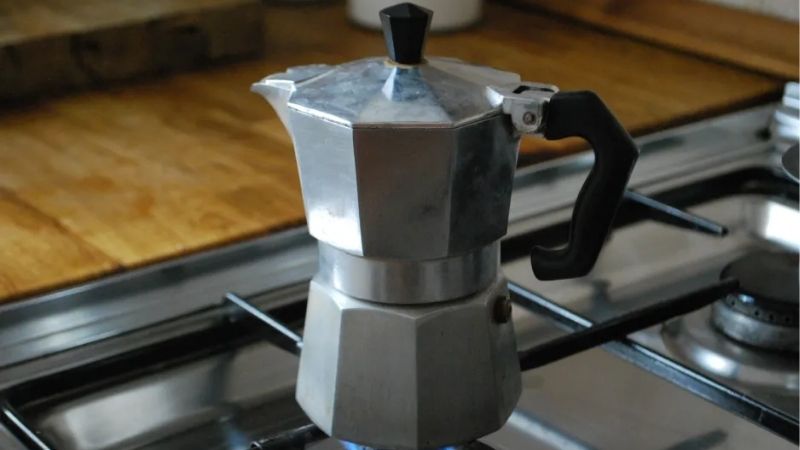
Electric models draw roughly 750 to 1,000 W and shut off or drop to a keep-warm mode when brewing finishes. Stovetop pots have no such automation, so you watch the glass knob and pull the pot yourself.
Space and Fit: Counter, Burner or Camp Grate
Electric percolators typically take 7 to 9 in (18 to 23 cm) of counter diameter and 12 to 14 in (30 to 36 cm) of height with the lid on, so check cabinet clearance if it lives under an upper shelf.
Stovetop models need a compatible base. Induction cooktops require magnetic stainless steel, and a narrow pot base can wobble on a wide gas grate. For camping, check that the handle stays cool enough to grip and that the pot fits inside your existing cook set.
Grind Size and Basket Design
Coarse grind is not optional in the best coffee maker percolator or the cheapest one. Fine grounds pass straight through the basket perforations and end up in the cup, and they over-extract fast under repeated recirculation. Percolator grind should look closer to sea salt than sand.
Basket quality separates good pots from frustrating ones. Look for a stem that seats firmly, a lid that clamps on the basket, and perforations fine enough to hold grounds without clogging. Loose baskets tip during pouring and dump grounds into the coffee.
Materials, Cleaning and Running Costs
Stainless steel is the practical default, since aluminum reacts over time and enamel chips. There are no filters to buy, which makes running cost effectively zero beyond coffee itself, a genuine advantage over capsule systems.
Cleaning means the basket, stem and interior every time, because coffee oils accumulate inside the tube and go rancid. Many stainless models are dishwasher safe, but the electric base never is, so check which parts detach.
Best Coffee Maker Percolator Picks: Seven Models Compared
The lineup below covers plug-in models for daily kitchen use and stovetop pots built for camp stoves and open fires. Figures are manufacturer-stated and combined with common patterns from long-term owner feedback.
Presto 02811 12-Cup Stainless Steel Percolator
The default recommendation for electric percolation: 12 cups in roughly 10 to 12 minutes, stainless interior and exterior, with an automatic switch to keep-warm and a detachable cord for pouring at the table.
The signal light indicates readiness but is not a temperature control, and there is no strength adjustment. Grind size and how promptly you unplug it are your only levers on flavor.
Hamilton Beach 40614R Stainless Steel Percolator
A 12-cup electric with a cool-touch handle and a keep-warm function, plus a quick-pour spout that drips less than most. Cycle time lands around 12 minutes for a full pot.
The lid latch is less positive than on some rivals, so pour deliberately. Owners after a year most often report a scaled heating plate rather than any mechanical failure, which regular descaling prevents.
Cuisinart PRC-12 Classic 12-Cup Percolator
Brushed stainless with a 12-cup capacity, a brew indicator and a warming mode that holds temperature without continuing to percolate, which limits over-extraction after the cycle ends.
It carries a higher price than basic models and the same lack of strength control. The gauge window is helpful, though it needs periodic cleaning to stay readable.
Elite Gourmet EC812 Electric Percolator
A budget-tier 12-cup unit with stainless housing and a keep-warm setting, aimed at people who want percolated coffee without spending much. It brews in roughly 12 minutes.
Build quality is thinner than the Presto or Cuisinart, with a lighter lid and basket. Reasonable for occasional use; less convincing as a twice-daily workhorse.
Farberware Classic Yosemite 8-Cup Stovetop Percolator
Heavy-gauge stainless with a permanent basket, sized at 8 cups and usable on gas, electric and induction ranges. There is no electronics package to fail, which is the whole point.
You must watch it: perking too long past first bubbles produces harsh coffee. The handle warms on gas burners, so keep a towel or mitt within reach.
GSI Outdoors Glacier Stainless Percolator
Built for camp use in 8 and 12 cup sizes, with a rugged silicone-wrapped handle and a body that tolerates open flame and rough packing better than kitchenware.
It is heavier than aluminum backpacking pots, so ounce-counting hikers will look elsewhere. For car camping and cabins it is close to indestructible.
Coletti Bozeman Camp Percolator
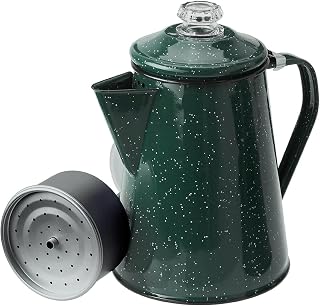
A 9-cup stainless camp pot with a heavy base for stability on grates, a wooden-style handle that stays cooler over fire, and a wide mouth that makes it easy to clean outdoors.
The lid knob loosens with heat cycling and benefits from occasional tightening. Like all campfire cookware, the exterior will blacken permanently over an open flame.
| Model | Type | Capacity | Brew time | Main trade-off |
|---|---|---|---|---|
| Presto 02811 | Electric | 12 cups | 10-12 min | No strength control |
| Hamilton Beach 40614R | Electric | 12 cups | ~12 min | Lid latch feel |
| Cuisinart PRC-12 | Electric | 12 cups | ~12 min | Higher price |
| Elite Gourmet EC812 | Electric | 12 cups | ~12 min | Lighter build |
| Farberware Yosemite | Stovetop | 8 cups | Watch by eye | Needs monitoring |
| GSI Glacier | Stovetop / fire | 8 or 12 cups | Watch by eye | Heavy for hiking |
| Coletti Bozeman | Stovetop / fire | 9 cups | Watch by eye | Knob loosens |
Listing prices change regularly across every best coffee maker percolator option above, so verify the current figure at purchase rather than relying on any number quoted in a review.
Durability, Flavor Control and Buying Timing
A best coffee maker percolator pick will usually outlive most drip machines because there is so little to break. What determines satisfaction is technique and upkeep rather than the model badge on the side.
What Actually Fails Over Time
On electric models, the heating element and thermostat are the wear items; symptoms are longer cycles and coffee that never gets properly hot. Scale is the usual culprit, and a monthly vinegar or descaler cycle in hard-water areas prevents most of it.
On stovetop pots, failures are mechanical: a cracked glass knob, a warped basket, a handle rivet working loose. All three are inexpensive to replace on quality stainless models, and spare baskets are commonly sold separately.
Owner reports gathered over several years point the same direction: the pots that get retired early are almost always aluminum or thin-gauge steel, where the base warps on a hot burner and the pot then rocks on a flat glass cooktop. Heavier stainless bases avoid that failure entirely.
Dialing In the Flavor
Start with a coarse grind, roughly one tablespoon per 5 oz cup, and stop the cycle as soon as the color in the knob looks right rather than letting it run long. Cutting a minute off the cycle removes most bitterness complaints.
Water quality matters more than with paper-filtered methods, since nothing removes minerals or off-flavors. Filtered water yields a noticeably cleaner cup, and it slows scale formation inside electric units.
Ratio is the other lever most people never touch. One level tablespoon per 5 oz (148 mL) cup is a sensible starting point, and moving up or down by a quarter tablespoon changes strength far more predictably than switching brands of coffee does.
Seasonal Demand and Deal Windows
Camp-oriented percolators sell hardest through summer and early fall, while electric units get gift attention in the fourth quarter. Amazon runs Prime Big Deal Days in early October and Black Friday and Cyber Monday in late November, which is when kitchen electrics are most likely to be reduced.
Actual discounts vary by model and cannot be predicted, so if a pot fits your burner and your capacity needs today, there is little penalty in buying today. Stovetop stainless rarely fluctuates much either way.
Frequently Asked Questions
Questions that come up most often from people new to percolation.
Why does my percolator coffee taste bitter?
Almost always grind size or cycle length, even in the best coffee maker percolator. Use a coarse grind and stop percolation earlier; recirculating coffee over grounds for several extra minutes is what produces the harsh edge.
Do I need paper filters?
No. The metal basket is the filter. Some owners add a paper disc to reduce sediment, which is optional and slightly slows the cycle.
Is a percolator stronger than drip coffee?
It usually tastes stronger because of the recirculation and higher brew temperature, though the actual caffeine per ounce depends mostly on the coffee-to-water ratio you use.
Can stovetop percolators go on induction?
Only if the base is magnetic stainless steel. Aluminum pots will not work on induction hobs without a converter disc.
See More:
- Best low price dash cam
- Projector screens at Best Buy
- Best buy projector screens
- Best projector for games
- Best projector for gaming
Picking the Right Percolator for Your Setup
The best coffee maker percolator depends on where it will be used more than on any feature list. Kitchen counters with a socket favor the Presto or Cuisinart; campsites and cabins favor the Farberware, GSI or Coletti.
Match cup capacity to how many people actually drink, keep the grind coarse, stop the cycle promptly and clean the stem after every pot. Do that and a stainless percolator will still be brewing a decade from now.
Our top picks



![COLETTI Bozeman Percolator Coffee Pot — NO Aluminum or Plastic [9 cup]](https://m.media-amazon.com/images/I/61I-ZbVx6GL._AC_UL320_.jpg)
As an Amazon Associate we earn from qualifying purchases at no extra cost to you.
Write Your Review
No reviews yet. Be the first to share your experience!