
Key takeaways
Best camping coffee maker choices split along one line that nobody mentions in the listings: whether you carry it on your back or lift it out of a car. This guide compares seven options on brew method, packed weight, fuel requirement and how much cleanup each one demands at a site with no running water at all.
As an Amazon Associate we earn from qualifying purchases.
Our top picks


![COLETTI Bozeman Percolator Coffee Pot — NO Aluminum or Plastic [9 cup]](https://m.media-amazon.com/images/I/61I-ZbVx6GL._AC_UL320_.jpg)


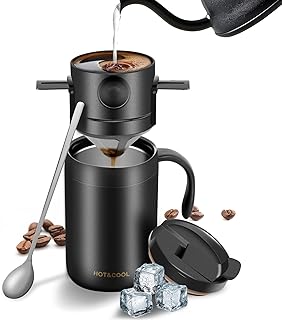
![COLETTI Sierra Camping Pour Over Coffee Dripper — Collapsible Pour Over Coffee Dripper — Includes Pack of Paper Filters [Black, Pack of 1]](https://m.media-amazon.com/images/I/81W9+Vau3GL._AC_UL320_.jpg)

As an Amazon Associate we earn from qualifying purchases at no extra cost to you. Ratings are shown as listed on Amazon.
By Daniel Foster
How Camp Brewing Differs From Kitchen Brewing
Everything that makes a home brewer good becomes a liability outdoors, which is why the best camping coffee maker is rarely a scaled-down kitchen machine. Weight, fragility, cleanup water and fuel consumption all matter more than extraction refinement, and the right choice depends on which of those constraints binds hardest on your trips.
Weight, Brew Method and Fuel Draw: The Numbers That Decide It
Packed weight is the first filter. Ultralight presses and collapsible drippers land between 2 and 8 ounces, French press mugs sit near 10 to 16 ounces, and a stovetop moka pot or propane drip unit runs from 1 to 6 pounds. Backpackers care; car campers usually do not.
Brew method sets the water and time budget. Immersion methods such as a press need four minutes and a thorough rinse afterwards, pour-over needs a slow kettle pour and produces a disposable or rinsable filter, and pressure methods extract in under a minute with the least waste.
Fuel draw is the number people forget. Boiling roughly 12 ounces of water takes several minutes on a canister stove and consumes measurable fuel, so a method requiring two heating cycles for one pot costs you gas as well as time on a multi-day trip.
Space and Fit: Pack Volume and Nesting
Measure the space you actually have. A collapsible dripper flattens to the thickness of a plate, an AeroPress-style press nests inside a wide-mouth mug, and a French press mug replaces a mug you would carry anyway, which makes its real weight penalty far smaller than the number suggests.
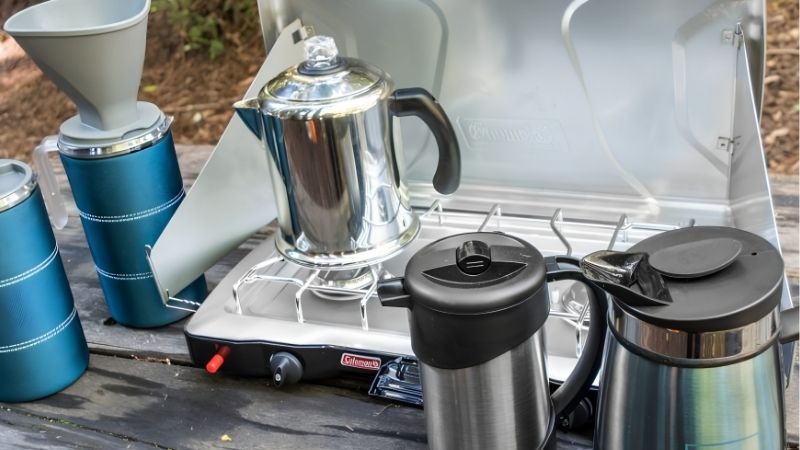
For car camping, the constraint moves to the stove surface and the bin. A propane drip unit needs a stable burner and a level surface, and a moka pot demands a burner small enough that the flame does not lick up the sides. Check the base diameter against your stove before buying.
Cleanup, Water Use and Leave No Trace
Grounds disposal matters at a real campsite. Methods producing a compact puck, such as pressure presses, let you pack out the grounds cleanly in a bag. Loose slurry from a French press needs straining or carrying out wet, which is unpleasant in a pack.
Water for rinsing is finite. A dripper with a paper filter rinses in a few ounces, while a press plunger with a mesh screen needs more effort and more water to clear fines. In water-scarce conditions that difference decides the winner.
Seven Options From Ultralight to Car Camping
The best camping coffee maker candidates below run from a few ounces in a backpack to a full drip brewer on a two-burner stove. Each entry names a genuine drawback. Specifications reflect manufacturer figures and pooled long-term owner reports rather than testing conducted by this site.
1. AeroPress Go — The Backpacking Default
A pressure-assisted immersion brewer that packs into its own mug, weighing around 11 ounces complete. Brew time is roughly a minute, the paper filter produces a clean cup, and the spent puck ejects as a dry disc that packs out without mess.
Capacity tops out near 8 ounces per brew, so a group needs several cycles. The plunger and chamber are plastic and can crack if crushed under a heavy load in a pack.
2. Sea to Summit X-Brew — Smallest Packed Size
A collapsible silicone pour-over cone with a reusable stainless mesh filter, flattening to about an inch thick and weighing near 3 ounces. It sits on almost any mug and needs nothing but hot water.
The mesh filter passes more oils and fines than paper, producing a heavier cup, and clearing those fines takes rinse water. Pouring control from a pot rather than a gooseneck kettle is imprecise.
3. GSI Outdoors JavaPress — Full Press Without Glass
A French press in shatterproof plastic with an insulated sleeve, brewing around 30 ounces for a group. The mesh assembly is easy to disassemble and rinse, and the whole unit tolerates being knocked around in a bin.
Grounds disposal is the weak point, since the slurry must be strained or carried out wet. It is also bulky in a pack, making it a car camping choice rather than a backpacking one.
4. Stanley Adventure All-in-One Boil and Brew — One Vessel Does Both
Boils water on the stove and brews as a press in the same stainless body, which removes a whole item from the kit. Two nesting cups store inside, and the construction survives years of rough handling.
It is heavy for its capacity and the stainless body gets very hot with no insulated handle on some versions. Cleaning between boiling and brewing duties takes extra water.
5. Wacaco Nanopresso — Espresso Without a Machine
A hand-pumped pressure brewer capable of genuine espresso-level pressure from a small piston, weighing around 12 ounces. It uses ground coffee or an adapter for capsules and cleans with a few ounces of water.
Output is a single small shot, so it suits one person rather than a group. The pumping action takes practice, and the piston seals are a wear part that eventually needs replacing.
6. Bialetti Moka Express — Stovetop Classic
The aluminium stovetop pot produces a concentrated, strong cup with no filters to carry and no consumables at all. A three-cup size is compact enough for two people and costs very little.
It needs a small, controllable flame and a stable stand, which rules out many backpacking stoves. Aluminium also dents easily and the gasket degrades over a few seasons of heat cycling.
7. Coleman Propane Camping Coffee Maker — Group Volume
A genuine drip brewer running on a propane cylinder or a stove burner, producing a full carafe for a group without repeated cycles. For a family basecamp where several people want coffee simultaneously, nothing else here competes.
It is by far the heaviest and bulkiest option, needs a level surface and dedicated fuel, and the carafe is a breakage risk in transit. Strictly a car camping tool.
| Option | Method | Approx. weight | Serves | Best for |
|---|---|---|---|---|
| AeroPress Go | Pressure immersion | 11 oz (312 g) | 1 | Backpacking |
| Sea to Summit X-Brew | Pour over | 3 oz (85 g) | 1 | Ultralight packing |
| GSI JavaPress | French press | 16 oz (454 g) | 2 to 3 | Car camping groups |
| Stanley Boil and Brew | Boil plus press | 2 lb (907 g) | 2 | One-vessel kits |
| Wacaco Nanopresso | Manual pressure | 12 oz (340 g) | 1 | Espresso drinkers |
| Bialetti Moka Express | Stovetop pressure | 1 lb (454 g) | 2 | No consumables |
| Coleman propane brewer | Drip | 6 lb (2.7 kg) | 4 to 6 | Family basecamp |
Prices and model availability change regularly, so confirm both at the moment of purchase rather than relying on published figures.
Durability, Cleaning and What Fails in the Field
Any best camping coffee maker fails differently from kitchen gear. Heat cycling, grit and compression in a pack account for nearly all of it, and knowing the pattern helps you choose the version that survives your particular trips.
Typical Failure Points
Plastic plungers and chambers crack when crushed or when heated repeatedly beyond their rating. Silicone collapsible cones tear at fold lines after enough cycles, and mesh filters deform if packed under weight without protection.
On metal items, moka pot gaskets harden and leak after a few seasons, aluminium bodies pit from acidic residue left overnight, and stainless press screens bend if forced. Almost all of it is preventable with a rigid storage spot in the bin.
Cleaning Without a Sink
Rinse immediately while the unit is still warm, since dried coffee oils are far harder to remove cold. Carry a small brush rather than relying on soap, which needs more water to clear and should not be introduced to a water source in any case.
Pack out grounds in a sealed bag rather than scattering them, as they attract wildlife and decompose slowly. Methods producing a compact puck make this materially easier than those producing wet slurry.
Seasonal Timing and Buying Windows
Outdoor cooking gear follows the trip calendar, with the widest selection appearing through spring and early summer as the season opens. End-of-season clearance in late summer and early autumn is where discontinued colours and last year’s models appear.
Beyond that, the general electronics and housewares reductions during Prime Big Deal Days in early October and Black Friday through Cyber Monday at the end of November also reach this category, particularly for the powered and stovetop options.
Frequently Asked Questions
These questions come up most often from readers assembling a camp kitchen for the first time and choosing the best camping coffee maker for it.
Can I just use instant coffee?
Yes, and modern specialty instant is far better than it used to be. It weighs almost nothing and needs no cleanup, which makes it a sensible choice for fast-moving trips where a brewing device is a luxury.
What grind should I bring?
Match it to the method: coarse for a press, medium for pour over, fine for espresso-style pressure brewers and moka pots. Pre-ground coffee stales within days, so a small hand grinder is a worthwhile addition on longer trips.
Does altitude affect brewing?
It does. Water boils at a lower temperature as elevation rises, which slows extraction and produces a weaker cup. Compensating with a slightly finer grind or a longer steep time recovers most of the difference.
Is a stainless filter better than paper?
On any best camping coffee maker using a filter, stainless removes a consumable from your kit and passes more oils, giving a fuller body. Paper produces a cleaner cup and disposes of fines with the filter, which saves rinse water at a dry site.
See More:
- Best low price dash cam
- Projector screens at Best Buy
- Best buy projector screens
- Best projector for games
- Best projector for gaming
Final Thoughts on the Best Camping Coffee Maker
The best camping coffee maker for you follows directly from how you travel. Backpackers should weigh grams and rinse water above everything, while car campers can prioritise capacity and let a heavier unit earn its space in the bin.
Check the packed dimensions against the bag or bin you actually use before ordering, confirm any stovetop item fits your burner, and think through where the grounds will go at a real site. Those three checks matter more than the brewing method itself.





Write Your Review
No reviews yet. Be the first to share your experience!