
Best buy projector mini shopping goes wrong in small rooms more than anywhere else, because a projector that produces a superb 120 in image needs a room deep enough to sit that far back. Throw ratio, not brightness, is what decides whether a model fits an apartment bedroom.
As an Amazon Associate we earn from qualifying purchases.
Our top picks
![[Electronic Focus with Short Throw] PANSEBA Mini Projector with WiFi 6 and Bluetooth, Auto Keystone Outdoor Movie Projector, Big Screen Home Portable Projector for Phone/TV Stick/Laptop/HDMI](https://m.media-amazon.com/images/I/71sUX91+p2L._AC_UY218_.jpg)


![Portable Smart Projector [Google TV 14.0 & 4K Support & Dolby] with WiFi and Bluetooth HDR10,Ceiling Mini Movie Short Throw Projector Outdoor with Built-in Apps Auto Focus Keystone for Home Bedroom](https://m.media-amazon.com/images/I/81n92yGeOnL._AC_UY218_.jpg)

![[ Ultra Short Throw & Built-in Apps ] Android 14 Smart Projector with WiFi and Bluetooth, USB-C Powered, 1080P FHD HDR10, Auto Focus/Keystone, YQHS Mini Portable Projector for Bedroom/Outdoor, Yellow](https://m.media-amazon.com/images/I/71GGSDC3-KL._AC_UY218_.jpg)


As an Amazon Associate we earn from qualifying purchases at no extra cost to you.
By Daniel Foster
🛒 Best Price Today on Amazon
Prime members get fast, free shipping on everything above, plus member-only deals. New members get a 30-day free trial — cancel anytime.
Start 30-Day Prime Free Trial →See Today’s Amazon DealsChoosing a Best Buy Projector Mini for a Small Room
Room depth is a fixed constraint, and every best buy projector mini decision follows from it. Working out what image size your space can physically produce, before comparing any models, removes most of the products on the market and makes the remaining decision straightforward.
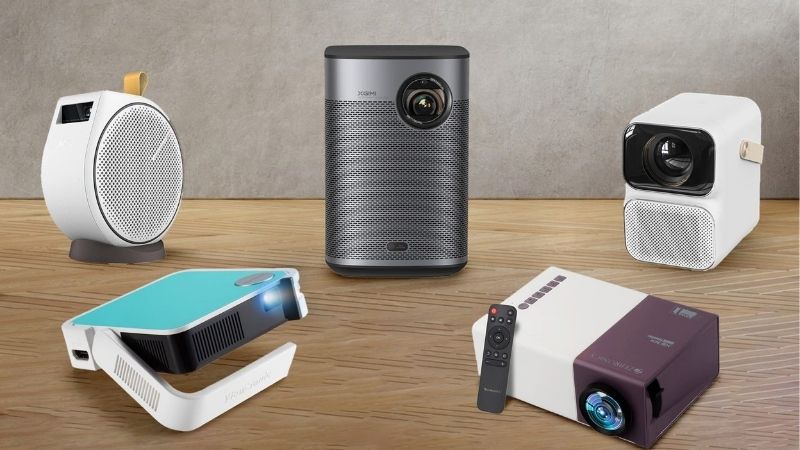
Throw Ratio, ANSI Lumens and Native Resolution
Throw ratio is distance divided by image width. A standard portable at 1.2:1 needs roughly 8.5 ft (2.6 m) for a 100 in diagonal picture, while a short-throw model at 0.8:1 needs about 5.7 ft (1.7 m) for the same image. That gap decides which rooms work. Manufacturers publish a throw distance table, and it is the most useful page in any manual.
Brightness must be quoted in ANSI lumens to be comparable: under 200 requires a dark room, 200-500 handles a dim one, and above 500 copes with some ambient light. Native resolution matters more than supported resolution, since 1080p input on a 480p panel is still 480p. That single distinction accounts for most of the disappointed reviews in this category.
Space and Fit: Measuring Before You Buy
Measure from the intended projector position to the wall or screen, and measure the wall space available for the image itself. A bedroom with 6-8 ft (1.8-2.4 m) of usable depth produces a 70-90 in picture on a standard throw ratio, which is often enough. Bigger is not automatically better, since the same light spread over more area simply looks dimmer.
Check the shelf or table depth as well, since a projector pushed too close to the edge is a hazard, and confirm where the power outlet sits. Ceiling mounting requires an image flip setting and a bracket, so verify both exist before planning that installation. Ceiling mounts also need the cable run planned before anything is drilled.
Keystone Correction and Placement Compromises
Digital keystone correction squares up a picture when the projector is off-centre or angled, but it does so by cropping and rescaling, which reduces the effective resolution you paid for. Physical placement is always better than correction, even when correction is automatic.
Lens shift moves the image without distortion and is rare at this size and price. Where it is absent, the practical answer is to position the projector square to the wall at the correct height, and only use correction to fix what placement genuinely cannot. Corner correction is the most lossy version and should be the last resort.
Light Source, Sound and Buying Timing
LED sources typically last 20,000-30,000 hours and laser longer, so neither needs replacing in home use, though both dim gradually. Built-in speakers are adequate for a bedroom and thin for anything larger, so check for Bluetooth output or a headphone jack. Wireless audio adds lip-sync delay on some models, which is worth testing early.
Fan noise rises with brightness and small chassis run louder than full-size projectors at the same output. Home cinema interest climbs from September as evenings shorten, and electronics discounts cluster around Prime Big Deal Days in early October and the late November sales period.
Top Picks: Six Minis That Work in Tight Spaces
The list favours short throw ratios and honest brightness figures, with a genuine drawback listed for each. Specifications are manufacturer figures combined with aggregated owner reports rather than testing of our own, and claims should be verified on the individual listing before purchase. Which best buy projector mini fits is decided by your room depth before anything else.
| Model | Rated brightness | Native resolution | Throw character | Best for |
|---|---|---|---|---|
| Epson EF12 Mini Laser | Around 1,000 lumens | 1080p | Standard, bright | Rooms with some light |
| XGIMI MoGo 3 Pro | Around 450 ISO lumens | 1080p | Standard | Auto setup convenience |
| BenQ GS50 | Around 500 ANSI lumens | 1080p | Standard | Durable indoor and outdoor |
| ViewSonic M2e | Around 400 ANSI lumens | 1080p | Short-ish | Compact rooms |
| LG CineBeam Portable | Around 450 ANSI lumens | 1080p | Standard | Smart platform users |
| Anker Nebula Capsule Air | Around 150 ANSI lumens | 720p | Standard | Very small budgets |
Epson EF12 Mini Laser – Brightness in a Small Box
A laser light source rated around 1,000 lumens in a compact cube, which is considerably brighter than most portables and is the reason it copes with a room that is dim rather than dark. Native 1080p and a built-in smart platform round it out.
It is the most expensive option here and it is mains powered only, so there is no battery for garden use. The fan is audible in quiet scenes, which is the trade for pushing that much light out of a chassis this size.
XGIMI MoGo 3 Pro – Automatic Setup That Works
Rated near 450 ISO lumens with 1080p native resolution, a battery and automatic focus, keystone and obstacle avoidance. For a projector that moves between rooms, automatic setup saves genuine time and produces a squarer image than most people achieve manually.
ISO lumens is a different measurement standard from ANSI, so do not compare the figure directly with ANSI-rated models. Battery life at full brightness is shorter than quoted, and the automatic correction still crops the image slightly when it engages.
BenQ GS50 – Built to Be Moved
Around 500 ANSI lumens at 1080p with splash resistance and a drop-rated chassis, plus better built-in speakers than most competitors. If the projector will be carried between a living room and a garden regularly, durability is worth more than another hundred lumens.
It is bulkier and heavier than the pocket class, so portable here means between rooms rather than in a bag. Battery runtime covers a film rather than an evening, and the smart platform is more limited than the major television operating systems.
ViewSonic M2e – Compact With a Tighter Throw
Around 400 ANSI lumens at 1080p in a small chassis with a shorter throw character than most portables, which is exactly what a best buy projector mini setup needs in a room where you cannot sit far back from the wall.
The onboard interface is basic, so most owners add a streaming stick, which uses the HDMI port. Contrast in bright scenes is average for the class, and it needs a properly dark room to look its best despite the respectable brightness rating.
LG CineBeam Portable – Smart Platform Built In
Around 450 ANSI lumens at 1080p with a full smart television platform on board, which removes the need for an external stick and keeps cable clutter down. Automatic keystone and screen fitting handle placement in awkward rooms reasonably well.
Streaming app availability on projector platforms changes over time, so confirm which services are supported before relying on it. It also sits at the upper end of the price range for the brightness delivered, with the software being what you are paying for.
Anker Nebula Capsule Air – The Budget Entry
Around 150 ANSI lumens at 720p in a can-sized body with a battery, at a price well below everything else here. For casual use, a bedroom ceiling or entertaining children, it does the job without a significant outlay.
The brightness and resolution figures are the honest limits: text is soft and the room must be genuinely dark. Anyone planning regular film nights should move up to one of the 1080p models rather than expecting this to grow into that role.
Setup, Screens and Living With a Small Projector
A cheap projector placed well beats an expensive one placed badly, and that is truer of a best buy projector mini than of any full-size model. Three practical areas cover most of the difference between a picture that looks impressive and one that looks like a compromise.
Getting the Geometry Right
Calculate image size from the throw ratio rather than guessing, and set the projector square to the wall at the height the lens offset requires. Most portables project slightly upward from the lens centre, so a low table usually works better than a high shelf.
Use keystone correction only for what placement cannot fix. Every degree of digital correction crops the image and reduces sharpness, which is most visible on text and subtitles, and automatic correction is no less lossy than the manual version. Turning correction off and moving the projector a few inches usually looks better.
Surfaces, Light Control and Sound
A matte white wall works acceptably; a proper screen improves contrast noticeably, and a grey screen helps in rooms where light cannot be fully controlled. Screens also cost less than the brightness upgrade needed to overcome a poor surface. Blackout curtains do more for perceived picture quality than a step up in brightness rating would.
Built-in speakers in this class handle dialogue in a quiet bedroom and little else. A small Bluetooth speaker transforms the experience, though wireless audio adds lip-sync delay on some models, so test it before committing to that arrangement.
Maintenance and Long-Term Ownership
Vents collect dust, which raises operating temperature and makes the fan louder over time, so clearing the intake periodically is worthwhile. LED and laser sources dim gradually rather than failing, and brightness at year five is measurably lower than at purchase.
Batteries degrade with charge cycles and are usually not replaceable, which is what eventually retires a portable projector. Running on mains where possible preserves the battery and generally produces a brighter picture than battery mode allows in the first place.
See More:
- Best low price dash cam
- Projector screens at Best Buy
- Best buy projector screens
- Best projector for games
- Best projector for gaming
Final Thoughts on Choosing a Best Buy Projector Mini
Measure the room first, calculate the image size your throw distance allows, then set the brightness your lighting conditions require. Native resolution comes third, and brand or smart platform preference should only break ties between models that already fit the space.
The right best buy projector mini for a small room is the one whose throw ratio matches the distance you actually have. Measure from the projector position to the wall before ordering, and check current pricing and specification claims on the listing at purchase.

Write Your Review
No reviews yet. Be the first to share your experience!