
Best electric toothbrush dentist-recommended claims appear on almost every box, so the useful question is what sits behind them. The factual anchor is the ADA Seal of Acceptance, and the specifications that matter are brush type, pressure sensing, battery days and the price of replacement heads.
As an Amazon Associate we earn from qualifying purchases.
Our top picks
 Aquasonic Black Series Ultra Whitening Toothbrush
- 40,000 VPM Smart Toothbrush
- Accepted by the American Dental Association (ADA) Council…
- Modern Tech for a Healthy Smile


As an Amazon Associate we earn from qualifying purchases at no extra cost to you.
By Daniel Foster
Specifications come from manufacturer documentation and long-term owner feedback rather than lab testing. Nothing here is dental or medical advice; for gum disease, sensitivity or brushing technique, ask your dentist or dental hygienist.
🛒 Best Price Today on Amazon
Prime members get fast, free shipping on everything above, plus member-only deals. New members get a 30-day free trial — cancel anytime.
Start 30-Day Prime Free Trial →See Today’s Amazon DealsWhat Dentist-Recommended Actually Means
Marketing language and independent evaluation are different things, which is the whole problem with a best electric toothbrush dentist-recommended claim printed on a carton. Four specifications separate a brush clinicians genuinely endorse from one with a persuasive box.
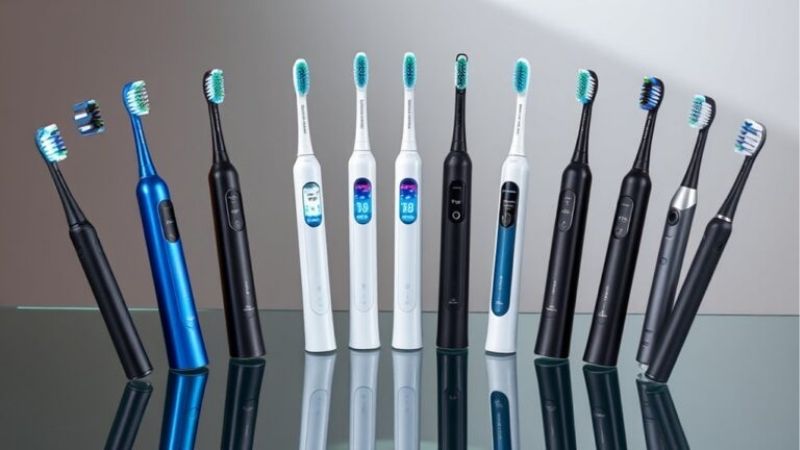
Brush Type, Battery Days and Head Cost
These three are the decisive numbers behind any best electric toothbrush dentist-recommended comparison. Brush type means sonic, which vibrates at high frequency across a conventional head shape, or oscillating-rotating, which spins a small round head back and forth. Both have substantial clinical literature behind them.
Battery life ranges from about five days on budget models to four weeks on premium ones, measured at two minutes twice daily. Replacement heads are the real long-term cost: at one head every three months, a household of four buys sixteen a year, and prices vary several-fold between brands.
The ADA Seal and Where to Check It
The phrase itself has a factual anchor. The American Dental Association awards its Seal of Acceptance to products that submit evidence of safety and effectiveness, and it is the closest thing to an objective version of the dentist-recommended claim. The list is published and searchable rather than something you take from packaging.
Check the current list before buying, because acceptance applies to specific models rather than to a whole brand, and product lines change. A brush without the Seal is not necessarily poor, but a brush with it has submitted evidence to a third party.
Pressure Sensors, Timers and Technique
Two features change behaviour rather than just measuring it. Brushing too hard is one of the most common problems dentists see, and a pressure sensor that lights up or reduces power is the feature most likely to change behaviour. Quadrant timers dividing two minutes into four thirty-second sections do the same for coverage.
Neither replaces technique. The angle at the gum line and the time spent there matter more than any mode setting, which is exactly the sort of thing worth reviewing with your hygienist rather than learning from an app.
Where It Lives in the Bathroom
Bathrooms constrain this category more than people expect. Charging bases need a socket within reach of a shelf or countertop, and bathroom sockets are limited in many homes. Travel cases, USB charging and battery-only models exist precisely because of this constraint.
Measure the shelf depth and check socket position before buying a brush with a large charging base or a UV sanitising case, since those units take considerably more room. In a shared bathroom, head storage for several people is worth planning too.
Six Brushes Compared
A best electric toothbrush dentist-recommended shortlist should span both mechanisms, so these run from budget oscillating models to premium sonic units. Brush head economics are noted throughout, since that is where the money actually goes over years, and each entry lists a genuine drawback.
| Model | Type | Battery | Best for |
|---|---|---|---|
| Oral-B Pro 1000 | Oscillating-rotating | Around 7 days | Lowest cost entry |
| Oral-B iO Series 5 | Oscillating with sensor display | Around 2 weeks | Pressure feedback |
| Philips Sonicare 4100 | Sonic | Around 2 weeks | Gentler feel |
| Philips Sonicare 9900 Prestige | Sonic | Around 2 weeks | Automatic adjustment |
| Quip Electric Toothbrush | Sonic, battery powered | Months on one cell | Travel and simplicity |
| Burst Original Sonic | Sonic | Around 4 weeks | Long battery life |
Oral-B Pro 1000: The Sensible Entry Point
A single-mode oscillating-rotating brush with a two-minute timer and a pressure sensor, at the lowest price of any full-size rechargeable model. It does the two things that matter and skips everything else.
Battery life is around a week, so it needs the charger to stay on the counter, and there is only one mode. The handle is also noisier than sonic brushes, which some people dislike more than they expect.
Oral-B iO Series 5: Feedback That Changes Habits
Combines the oscillating head with a quieter magnetic drive, a display and a pressure indicator that turns from green to red, which is the clearest feedback in this group. Brushing pressure improves quickly when the signal is that visible.
The iO brush heads cost noticeably more than standard Oral-B heads and are not interchangeable with older handles, which raises the long-term cost. The unit is also physically larger and needs a charging spot with a socket.
Philips Sonicare 4100: Gentle and Straightforward
A sonic brush with a two-minute timer, quadrant pacing and a pressure sensor, delivering a gentler feel than oscillating models, which suits people with sensitive gums or receding gum lines who find rotation uncomfortable.
There is only one intensity setting on the base model, and it feels weak to anyone used to a rotating brush. Sonicare heads are also relatively expensive, and the click-on fit means third-party alternatives vary in quality.
Philips Sonicare 9900 Prestige: Automatic Adjustment
Detects the brush head fitted and adjusts intensity and mode automatically, with pressure and scrubbing feedback through the handle. For someone who wants to think about brushing as little as possible while still doing it well, it removes the decisions.
It is the most expensive brush here by a wide margin and the automation adds little over simply choosing the right mode yourself. Premium heads also carry a premium price, which compounds across a household.
Quip Electric Toothbrush: Simple and Portable
A slim battery-powered sonic brush with a two-minute timer and thirty-second pacing, running for months on a single cell and travelling without a charger. It holds an ADA Seal, which is worth noting for a brush this simple.
Vibration is gentle and there is no pressure sensor, so it does less to correct heavy-handed brushing. It also relies on a replaceable battery rather than recharging, which is convenient for travel and a recurring cost otherwise.
Burst Original Sonic: Long Battery, Subscription Heads
A sonic brush with around four weeks of battery life and three modes, sold with a head subscription that lowers the per-head price compared with buying premium heads individually.
The subscription is the point of friction: it is easy to forget, and cancelling is an extra task. Clinical evidence for its charcoal-coated bristles is thin, and dentists generally treat abrasive coatings with caution, which is a fair question to raise at your next appointment.
Heads, Batteries and Long-Term Ownership
Three ownership realities decide the true cost and lifespan of any best electric toothbrush dentist-recommended pick, and none of them appears in the specification list.
Replacing Heads on Schedule
Replacement heads are the real budget line, not the handle. Heads should be replaced roughly every three months, or sooner if bristles splay, because worn bristles clean less effectively regardless of how good the handle is. This is where nearly all long-term spending goes.
Third-party heads cost far less and vary in bristle quality and fit; a loose head wobbles and wastes motion. If you use them, buy a small quantity first and check the fit rather than committing to a large multipack.
Battery Ageing and Waterproof Seals
Rechargeable brush batteries lose capacity over several years, and the handles are generally not designed to be opened, so a brush with a failing battery is effectively at end of life. Leaving a handle permanently on the charger accelerates that decline on older designs.
Waterproof seals also degrade with age and with the temperature swings of a steamy bathroom. A handle that starts holding water inside or losing its charge quickly is telling you the seal has gone, and it is not repairable at home.
Warranty, Certification and Buying Timing
Expect one to two years of warranty and check for UL or ETL marks on the charging base. Register the product, since claims require proof of purchase and the base is a mains-powered device in a wet room.
Electric toothbrushes are a heavy gift category, so promotions cluster around the Amazon deal event in early October and the Black Friday to Cyber Monday window at the end of November, often as handle-plus-heads bundles. Prices move constantly, so verify at purchase.
Frequently Asked Questions
Three questions come up in nearly every message from readers trying to verify a best electric toothbrush dentist-recommended claim.
Is sonic better than oscillating?
Both have substantial clinical support and neither is universally superior. Oscillating brushes feel more mechanical and cover small areas intensively; sonic brushes feel gentler and cover more surface per stroke. Comfort determines which one you use properly, which matters more than the mechanism.
Do the extra modes do anything?
Whitening and gum care modes mostly vary intensity and duration. The features with the clearest practical benefit are the two-minute timer and the pressure sensor. If a brush has those two, additional modes are convenience rather than clinical difference.
How do I check a dentist-recommended claim?
Look for the ADA Seal of Acceptance on the current published list rather than on the packaging, since it applies to specific models. Beyond that, ask your own dentist, who knows your gum condition and technique and can advise accordingly.
See More:
- Best low price dash cam
- Projector screens at Best Buy
- Best buy projector screens
- Best projector for games
- Best projector for gaming
Final Thoughts on Choosing a Brush
A best electric toothbrush dentist-recommended shortlist should be built from a timer, a pressure sensor and a head you will actually replace every three months. Brush type is a comfort decision, since both mechanisms are well supported clinically.
Check the ADA list for the specific model, price a year of replacement heads before committing, and confirm there is a socket within reach of your bathroom shelf. Whichever best electric toothbrush dentist-recommended option you choose, technique at the gum line still matters most, and that is a conversation for your next appointment.





Write Your Review
No reviews yet. Be the first to share your experience!