
Key takeaways
Best buy coffee maker searches cover two intents at once: people looking for a retailer, and people looking for the machine that represents the best purchase. Both end at the same specifications, and brew temperature is the one that separates good drip coffee from flat coffee.
As an Amazon Associate we earn from qualifying purchases.
Our top picks


As an Amazon Associate we earn from qualifying purchases at no extra cost to you. Ratings are shown as listed on Amazon.
By Daniel Foster
Specifications come from manufacturer documentation and long-term owner feedback rather than lab testing. Retailer stock and in-store pricing change constantly and are not quoted here; verify current figures wherever you buy.
🛒 Best Price Today on Amazon
Prime members get fast, free shipping on everything above, plus member-only deals. New members get a 30-day free trial — cancel anytime.
Start 30-Day Prime Free Trial →See Today’s Amazon DealsWhat Separates a Good Drip Machine From a Cheap One
Drip machines look identical from the outside and differ enormously inside, which is why a best buy coffee maker shortlist should be built from specifications rather than styling. Four of them explain the gap.
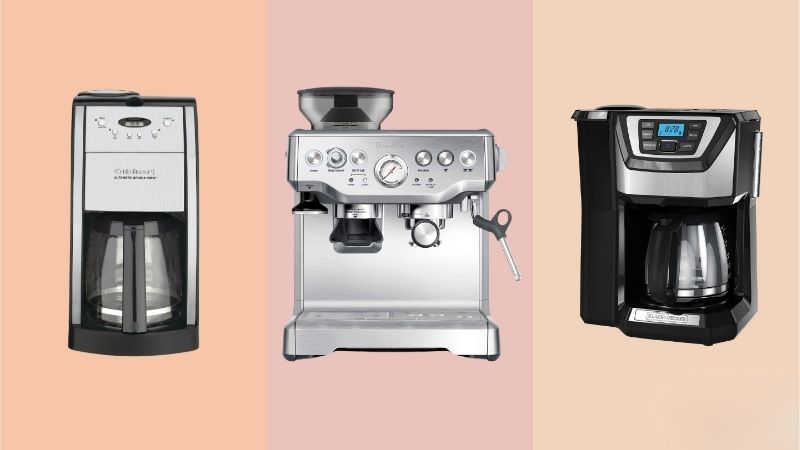
Brew Type, Capacity and Counter Footprint
These three are the decisive numbers behind any best buy coffee maker comparison. Brew type here means standard drip, and the meaningful subdivision is whether the machine holds proper brew temperature. Capacity runs from 4-cup units to 12-cup machines producing about 60 oz (1.8 L).
Footprint scales with capacity and with the water tank position. A 12-cup machine typically needs about 9 x 13 in (23 x 33 cm) of counter and 14 in (36 cm) of height, and top-loading tanks need clearance above that to open under a cabinet.
Brew Temperature and Contact Time
Brew temperature is where the money goes. The Specialty Coffee Association recommends water between 195 and 205 degrees F (90 to 96 C), held throughout the cycle rather than only at the start. Budget machines frequently brew below that range, which under-extracts the grounds and produces the thin, sour cup people blame on their beans.
Contact time matters equally. A well-designed machine finishes a full batch in roughly four to six minutes with even water distribution across the bed. Certification programmes exist precisely because so many machines fail one or both of these tests.
Carafe Type and What Happens After Brewing
The carafe decides what the coffee tastes like after the first cup. Glass carafes sit on a hot plate that continues cooking the coffee, which is why the second cup tastes worse than the first. Thermal carafes hold heat without applied heat and keep coffee drinkable for a couple of hours.
If more than one person drinks at different times, a thermal carafe changes the experience more than any other feature at this price. The trade-off is that stainless carafes are harder to see inside and slightly more awkward to clean.
Filters, Programmability and Daily Friction
Filters and controls decide the daily experience rather than the cup. Permanent mesh filters remove a recurring cost and let more oils through for a heavier body; paper filters produce a cleaner cup and make cleanup faster. Neither is better, but a machine that only accepts a proprietary shape is a long-term irritation.
Programmable start is genuinely useful if you want coffee ready before you reach the kitchen. Auto shut-off and a water filter in the reservoir are conveniences rather than quality features, and the reservoir filter handles taste rather than scale.
Six Drip Machines Compared
These range from certified brewers to sensible budget options, so the comparison covers what any best buy coffee maker shortlist realistically contains. Each entry lists a genuine drawback.
| Model | Capacity | Carafe | Best for |
|---|---|---|---|
| OXO Brew 9-Cup | 9 cups | Thermal | Certified brew temperature |
| Bonavita Connoisseur | 8 cups | Thermal | Simplicity done right |
| Breville Precision Brewer | 12 cups | Thermal or glass | Adjustable brewing |
| Braun MultiServe | 10 cups | Glass | Cup or carafe flexibility |
| Cuisinart DCC-3200 | 14 cups | Glass | Large batches |
| Ninja Programmable XL CE251 | 14 cups | Glass | Budget with brew styles |
OXO Brew 9-Cup: Temperature Done Properly
Holds water in the 195 to 205 degrees F (90 to 96 C) range with a rainmaker showerhead that wets the bed evenly, and it carries certification from the Specialty Coffee Association. The thermal carafe keeps coffee drinkable without a hot plate.
It is expensive for a nine-cup machine and the single-button interface takes a moment to learn. The thermal carafe also cools noticeably faster if you pour the first cup immediately and leave the lid off.
Bonavita Connoisseur: Fewer Features, Correct Basics
A pre-infusion mode, a flat-bottom filter basket, a powerful heater that reaches proper brew temperature quickly, and a thermal carafe. There is almost nothing to configure, which is the point.
There is no programmable timer on the standard model, so you press the switch yourself each morning. The narrow carafe opening also makes thorough cleaning slightly awkward compared with a wide glass jug.
Breville Precision Brewer: Control Over Every Variable
Allows adjustment of brew temperature, bloom time and flow rate, with presets including a cold brew mode and an over-ice setting, plus the option of a thermal or glass carafe. For someone who wants to tune the cup, nothing else here comes close.
It is the most expensive machine on this list and the most complicated, with a learning curve that most households never bother to climb. If you always brew the same thing, that flexibility is money spent on unused capability.
Braun MultiServe: Cup, Carafe or Travel Mug
Brews anything from a single cup to a full carafe using the same basket, with certified brewing performance and a straightforward control panel. For a household where one person drinks a mug and another wants a pot, that range is genuinely practical.
The glass carafe sits on a hot plate, so coffee left standing degrades in the usual way. It is also a physically large machine, requiring both counter width and cabinet clearance.
Cuisinart DCC-3200: The Familiar Workhorse
A 14-cup programmable machine with adjustable brew temperature, a charcoal water filter and a wide glass carafe, which makes it the practical answer for a household that goes through a lot of coffee.
Brew temperature control is coarse rather than precise, and the hot plate cooks the remaining coffee over time. Owners who report early failures usually describe a weakening pump, which is the classic symptom of skipped descaling in hard water.
Ninja Programmable XL CE251: Budget With Options
A 14-cup machine offering classic and rich brew styles, a small-batch setting and delay start, at a price well below the certified brewers. For most households replacing an ageing supermarket machine, it is a clear improvement.
Brew temperature is not held as consistently as on certified machines, and the rich setting compensates by slowing extraction rather than getting hotter. The plastic housing and glass carafe are ordinary, and the hot plate has the usual effect on the second hour.
Descaling, Cleaning and Where to Buy
Three ownership realities decide how long a best buy coffee maker keeps producing decent coffee, and none of them appears on the box.
Scale Is the Main Killer
Scale is what ends most drip machines, not component failure. Calcium builds inside the heating element and narrows the water path, producing longer, weaker brews and cooler coffee. Descaling every three to six months is standard guidance, and quarterly is realistic in hard water areas.
A charcoal filter in the reservoir improves taste but does not remove minerals, so it does not replace descaling. Using filtered water slows the process considerably and is the cheapest way to extend a machine’s life.
Basket, Carafe and Oil Residue
Coffee oils accumulate in the basket, the carafe and the spray head, and they turn rancid, which produces a stale taste people usually blame on beans. Washing the basket and carafe daily and running a cleaning cycle monthly prevents it.
Thermal carafes need particular attention because you cannot see inside. A long-handled brush and a periodic soak keep them clean; abrasive scourers scratch the interior and make residue cling faster.
Retail Versus Online, and When to Buy
Buying in a shop lets you judge the footprint and return a faulty unit over the counter. Online listings offer more models, replacement carafes and years of owner feedback. What matters more is the return window and warranty registration, which is usually one year on this category.
Kitchen electrics follow the electronics discount calendar, with the Amazon deal event in early October and the Black Friday to Cyber Monday window in late November drawing the most attention, since coffee machines sell heavily as gifts. Prices move constantly, so verify at purchase.
Frequently Asked Questions
Three questions come up in nearly every message from readers narrowing down a best buy coffee maker for a household of two or three.
Does brew temperature really matter that much?
Yes. Water below roughly 195 degrees F (90 C) under-extracts, producing sour, thin coffee no grind adjustment fixes. It is the single clearest difference between certified machines and budget ones using the same beans.
Thermal or glass carafe?
Thermal if anyone drinks a second cup more than 20 minutes after brewing, because a hot plate continues cooking the coffee. Glass if the pot is emptied immediately and you prefer seeing how much is left.
How many cups do I actually need?
Manufacturer cup ratings are about 5 oz (150 mL), not a mug. A 12-cup machine makes roughly six large mugs, so households of two are usually well served by an 8 or 9-cup machine with a smaller footprint.
See More:
- Best low price dash cam
- Projector screens at Best Buy
- Best buy projector screens
- Best projector for games
- Best projector for gaming
Final Thoughts on Choosing a Drip Machine
A best buy coffee maker decision comes down to brew temperature first, carafe type second and capacity third. Certified machines cost more because holding 195 to 205 degrees F through a full cycle requires a better heater, and that is what you taste.
Measure your counter and the cabinet clearance before ordering, and remember that manufacturer cup ratings are smaller than a mug. Whichever best buy coffee maker you settle on, descale on schedule and wash the basket daily, since both matter more to the cup than the price of the machine.





Write Your Review
No reviews yet. Be the first to share your experience!